Investing in Germany as an International Student: A Beginner’s Guide to Stocks, ETFs, Crypto, Brokers & Taxes
Published August 31, 2026
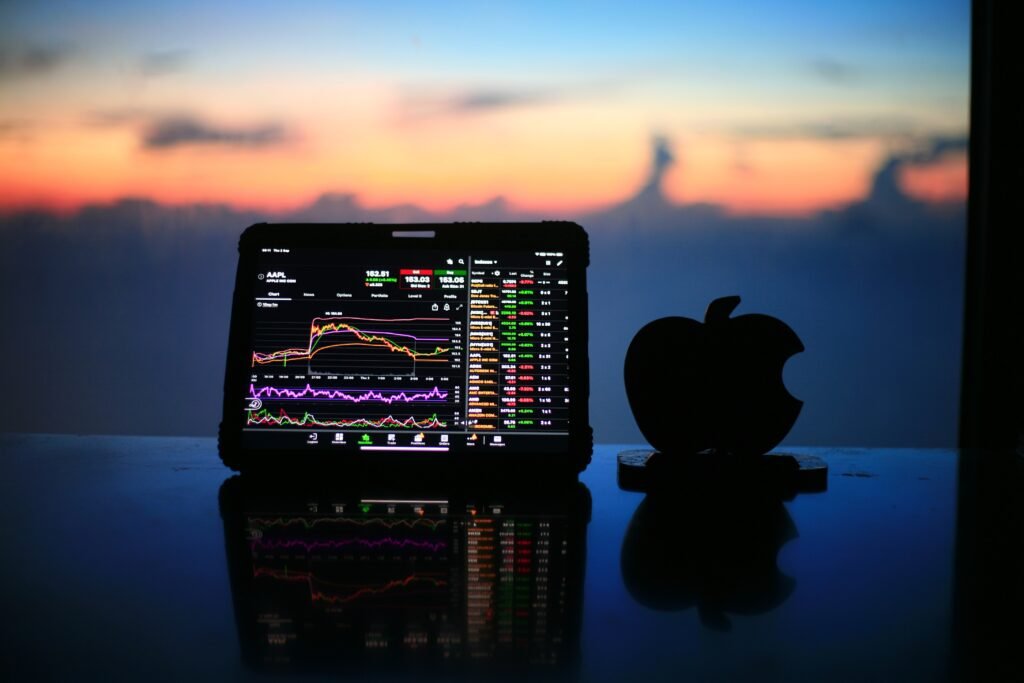
Investing in Germany is possible for many residents, including international students, provided that they meet the applicable legal, tax, and brokerage requirements.
For international students living in Germany, investing can be a useful way to learn about financial markets and potentially build long-term wealth. However, investing always involves risk, and your investment decisions should be based on your own research, financial situation, and risk tolerance.
Disclaimer: This article is for educational purposes only. It is not financial, tax, immigration, or investment advice. German tax rules can be complex and may change, so always verify the current rules with the German tax authorities (Finanzamt), a qualified tax adviser, or an appropriately regulated financial professional.
Can International Students Invest in Germany?
Yes. Being an international student does not automatically prevent you from investing in financial markets in Germany.
Depending on your circumstances, you may be able to invest in:
- Individual stocks
- ETFs and index funds
- Bonds and other securities
- Certain investment funds
- Cryptocurrencies
Your residence status, tax residency, age, income, and the terms of your bank or brokerage account can affect what services are available to you.
The important distinction is between investing your own capital and conducting financial activities as a business or source of employment income. Students should also make sure that their investment activities do not conflict with the conditions of their residence permit.
How to Start Investing in Germany
For a beginner, the process can be relatively straightforward.
Step 1: Open a Brokerage Account
You generally need a securities/brokerage account (Depot) to buy stocks or ETFs.
Popular German or Germany-focused investment platforms include:
- Trade Republic
- Scalable Capital
- Other regulated German or European brokers
International brokers may also be available, depending on your country of residence and eligibility.
However, one important consideration is tax reporting.
With many German brokers, taxes on certain investment income can be calculated and withheld automatically. If you use a foreign broker that does not handle German tax withholding, you may have additional reporting obligations and may need to calculate and declare your investment income yourself.
For beginners, a broker that provides German tax reporting and withholding can therefore make administration considerably easier.
Step 2: Verify Your Bank Account
After opening your brokerage account, you normally need to connect or verify a suitable bank account.
Money can then generally be transferred between your bank account and brokerage account according to the broker’s procedures.
Once your account is verified and funded, you can begin investing in eligible financial products.
What Can You Invest in Germany?
For a beginner, three broad categories are particularly common.
1. Individual Stocks
Examples include companies such as:
- NVIDIA
- Tesla
- Apple
- Microsoft
- Amazon
When you buy an individual stock, your investment is exposed primarily to the performance and risks of that particular company.
Individual stocks can experience significant price movements, especially around earnings reports, economic announcements, interest-rate decisions, or company-specific news.
Risk level: Generally higher than a diversified ETF, although the actual risk depends on the company and investment strategy.
2. ETFs and Index Funds
An ETF (Exchange-Traded Fund) can provide exposure to a basket of securities through a single investment.
For example, instead of buying shares of one company, an investor could buy an ETF that tracks a broad index containing hundreds or thousands of companies.
Examples of broad-market approaches include ETFs tracking:
- MSCI World
- FTSE All-World
- S&P 500
- STOXX Europe 600
Because ETFs can provide diversification, they are often considered a simpler starting point for long-term investors than selecting individual companies.
However, ETFs are not risk-free. Their value can fall, sometimes substantially, during market downturns.
Risk level: Depends on the ETF. Broad, diversified equity ETFs are generally less concentrated than individual stocks but can still experience substantial volatility.
3. Cryptocurrency
Cryptocurrencies such as Bitcoin and other digital assets are another investment category available through certain platforms.
However, crypto assets can be extremely volatile. Their prices can rise or fall dramatically over short periods.
For this reason, beginners should understand the risks before allocating money to cryptocurrencies.
Risk level: High to extremely high, depending on the asset and strategy.
Crypto should not be treated as equivalent to a diversified stock-market ETF.
German Investment Taxes: What International Students Should Know
German investment taxation can be confusing, particularly for international students who are unfamiliar with the German tax system.
For many private investors, income from investments such as dividends and realized capital gains is generally subject to Germany’s Abgeltungsteuer (capital income tax) system.
The commonly referenced basic rate is:
25% capital income tax + 5.5% solidarity surcharge on the tax = 26.375%
Church tax may also apply depending on your circumstances.
However, the actual tax calculation can be affected by factors such as:
- Your tax residency
- The type of investment
- Dividends versus capital gains
- Losses
- The investment fund’s tax treatment
- Your Sparer-Pauschbetrag
- Whether church tax applies
- Whether your broker withholds German taxes automatically
Therefore, the simple statement that every investment profit is always taxed at exactly 26.375% is an oversimplification.
What Is the Sparer-Pauschbetrag?
Germany provides an annual Sparer-Pauschbetrag, which is a tax-free allowance for certain investment income.
The amount can change over time, so investors should check the current applicable allowance.
If your eligible investment income is below the applicable allowance, you may not owe German income tax on that portion.
Many German brokers allow customers to submit a Freistellungsauftrag, which can allow the applicable allowance to be considered automatically when the broker calculates tax withholding.
Realized vs. Unrealized Investment Gains
One of the most important concepts for beginners is understanding the difference between unrealized gains and realized gains.
Imagine you invest:
€10,000
After some time, your portfolio increases in value to:
€12,000
Your €2,000 increase is an unrealized gain if you have not sold the investment.
The situation changes when you sell.
If you sell the investment for €12,000, the €2,000 gain becomes a realized gain.
The tax treatment can depend on the type of asset and applicable German tax rules.
Therefore, you should not simply assume that every increase shown in your brokerage account immediately creates the same tax liability as a realized sale.
What About Cryptocurrency Taxes in Germany?
Cryptocurrency taxation in Germany is an area where many online guides provide outdated or oversimplified information.
The tax treatment of crypto can depend on factors including:
- The type of transaction
- How long the asset was held
- Whether the activity is considered private or commercial
- The applicable annual tax rules
- The amount of income
- Whether the transaction involves exchanging one crypto asset for another
- Staking, lending, or other crypto-related activities
Historically, Germany has provided special tax treatment for certain privately held crypto assets when they are sold after a sufficient holding period. However, investors should not rely on a blanket statement such as “hold crypto for one year and it is always tax-free.”
Crypto tax rules can be complicated, and the treatment of activities such as staking, lending, swaps, and frequent trading may differ.
If you have significant cryptocurrency activity, consulting a German tax professional is strongly recommended.
Does Investing Affect a German Student Residence Permit?
International students should distinguish between long-term investing and operating a frequent or commercial trading activity.
Simply owning investments does not automatically mean that you are working in Germany.
However, students should be careful about activities that could potentially be considered self-employment, commercial activity, or another form of economic activity requiring authorization.
In particular, do not assume that frequent trading, leveraged products, derivatives, or other sophisticated strategies are automatically compatible with your residence status.
If your investment activity becomes substantial, systematic, or business-like, obtain professional immigration and tax advice before proceeding.
Can Students Invest Money Received From Their Family?
A student may have personal capital originating from legitimate sources such as:
- Savings
- Family support
- Previous employment
- Scholarships or other legitimate funds
However, you should maintain proper documentation showing the legitimate source of substantial funds.
This becomes particularly important when transferring large amounts of money internationally or when a bank or broker asks for source-of-funds documentation.
Never use borrowed money or money whose origin you cannot document simply because you want to invest it.
What About Day Trading and Leverage?
Investing and trading are not the same thing.
A long-term investor might purchase a diversified ETF and hold it for many years.
A trader might buy and sell assets frequently in an attempt to profit from short-term price movements.
Day trading, CFDs, futures, options, margin trading, and leveraged products involve substantially different risks and may have different tax, regulatory, and residence-status implications.
For students who are new to investing, a simple long-term strategy is generally easier to understand and manage than highly leveraged short-term trading.
Never assume that a financial product being available on a platform means that it is appropriate for your circumstances.
Why a German Broker Can Be Easier for Beginners
Using a German broker can simplify certain administrative aspects of investing because German brokers may handle applicable tax withholding and provide relevant tax documents.
This can be particularly useful for international students who are still learning how the German tax system works.
With a foreign broker, you may have greater responsibility for:
- Tracking transactions
- Calculating taxable investment income
- Reporting income
- Maintaining records
- Understanding applicable German tax treatment
That does not mean foreign brokers are necessarily unsuitable. It simply means that the administrative responsibilities can be different.
Important Risks Before You Start Investing
Investing is not a guaranteed way to make money.
Before investing, consider:
Market Risk
The value of stocks, ETFs, and crypto can fall.
Currency Risk
International investments may expose you to exchange-rate movements.
Concentration Risk
Putting most of your money into one company or asset can create significant losses.
Liquidity Risk
Some assets may be difficult to sell quickly at the price you expect.
Leverage Risk
Borrowing money to invest can magnify both profits and losses.
Tax Risk
Tax rules can change, and incorrect reporting can create additional liabilities.
Financial-Security Risk
Never invest money that you need for essential expenses, tuition, rent, health insurance, or emergency savings.
A Simple Beginner Strategy
If you are completely new to investing in Germany, you do not necessarily need a complicated portfolio.
A basic learning framework could be:
- Build an emergency fund.
- Understand your monthly expenses.
- Learn the basics of stocks, ETFs, and risk.
- Choose a regulated broker available to you.
- Understand the broker’s German tax handling.
- Start with an amount you can afford to lose.
- Consider diversification rather than concentrating everything in one company.
- Keep records of your investments and transactions.
- Review your tax obligations every year.
- Avoid making financial decisions based solely on social media, YouTube, Reddit, or someone else’s investment results.
Final Thoughts: Investing in Germany as an International Student
Investing in Germany is accessible to many international students and residents, but opening a brokerage account is only the first step.
The more important questions are:
What are you investing in?
Why are you investing?
How much risk can you tolerate?
What are your German tax obligations?
Does your investment activity remain compatible with your residence status?
For most beginners, understanding diversification, taxation, risk management, and long-term investing is more important than trying to identify the next NVIDIA, Tesla, or Bitcoin.
Investing should be based on your own research and financial circumstances—not on someone else’s success story.
This article is intended for educational purposes only and does not constitute financial, investment, tax, or immigration advice. Always verify current German regulations and seek professional advice when necessary.



Leave a Reply