The 16 States of Germany: History, Economy, Culture and What Makes Each State Unique
Published August 31, 2026
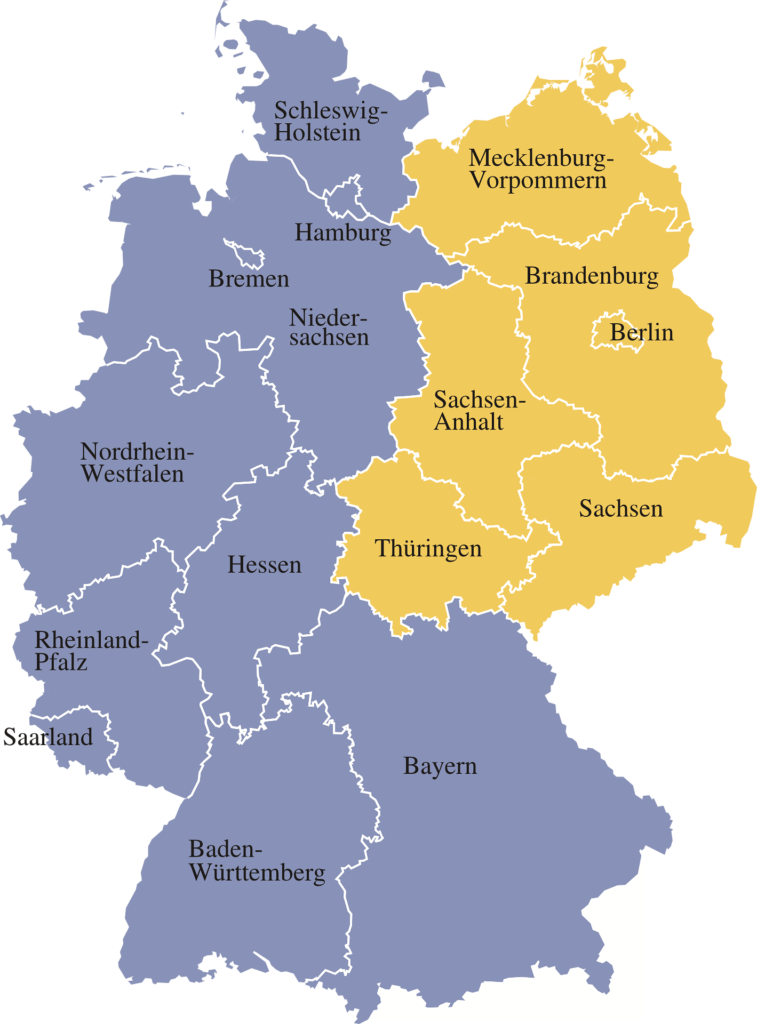
Germany is often described as one of Europe’s most powerful economies and a major destination for international students, professionals, and tourists.
But Germany is much more than a single, uniform country.
The Federal Republic of Germany is a federal state made up of 16 constituent states, known as Bundesländer. Each state has its own history, traditions, cultural identity, regional dialects, landscapes, and economic strengths.
From the port cities of northern Germany to the industrial heartland of the west and the Alpine landscapes of Bavaria, every state has a different story to tell.
Here is a fascinating overview of all 16 states of Germany, including their history, economy, culture, and unique characteristics.
1. Berlin – Germany’s Capital of History and Culture
Capital: Berlin
State type: City-state
Berlin is not only the capital of Germany—it is also one of the country’s 16 federal states.
The city’s modern history is deeply connected to the division of Germany after World War II. During the Cold War, West Berlin was surrounded by East German territory and separated from East Berlin by the Berlin Wall, which stood from 1961 until 1989.
Today, Berlin is one of Europe’s most dynamic cities and an international centre for politics, culture, technology, research, and the creative industries.
What makes Berlin unique?
- Historic landmarks such as the Brandenburg Gate and Berlin Wall
- A major international startup and technology ecosystem
- A highly multicultural population
- Numerous museums, galleries, theatres, and cultural institutions
- Extensive waterways, lakes, and bridges
Interestingly, although a bear appears on Berlin’s coat of arms and flag, the city’s name is not simply derived from the German word for bear. The historical origin of the name is more complex and is generally connected to an older Slavic place-name tradition.
2. Hamburg – Germany’s Major Port City
Capital: Hamburg
State type: City-state
Hamburg is Germany’s second-largest city and one of Europe’s most important logistics and trading centres.
Although Hamburg is located around 100 kilometres inland from the North Sea along the Elbe River, it has a major seaport with global connections.
The City of Bridges
Hamburg is famous for its enormous number of bridges. Depending on how bridges are counted, estimates vary, but the city has thousands of bridges, making it one of the world’s most bridge-rich urban areas.
Hamburg’s economy is strongly connected to:
- Shipping
- Logistics
- International trade
- Aviation
- Media
- Finance
- Technology
Willkomm-Höft
One of the region’s interesting maritime traditions is Willkomm-Höft, where ships arriving at the port area can be greeted with their national flag and, for certain vessels, their national anthem.
Hamburg combines a strong maritime identity with a modern, international economy.
3. Hesse – Germany’s Financial Powerhouse
Capital: Wiesbaden
Located in central Germany, Hesse (Hessen) is known for its forests, picturesque landscapes, and major financial centres.
The state is also closely associated with the famous Brothers Grimm, whose stories became part of global literary culture.
Frankfurt: Germany’s Financial Centre
Frankfurt am Main is the economic powerhouse of Hesse and one of Europe’s most important financial cities.
It is home to major institutions including:
- The European Central Bank (ECB)
- Deutsche Bundesbank
- Frankfurt Stock Exchange
- Major international banks and financial companies
Frankfurt is also famous for its distinctive skyline, earning it the nickname “Mainhattan.”
Frankfurt Airport
Frankfurt Airport is Germany’s largest airport by passenger traffic and one of Europe’s major aviation hubs.
Hesse therefore plays a crucial role in Germany’s financial, transportation, and international business networks.
4. Saxony – Germany’s Semiconductor Hub
Capital: Dresden
Located in eastern Germany, Saxony (Sachsen) has a fascinating history.
Several cities in the region suffered extensive destruction during World War II, while the state later became part of the German Democratic Republic (East Germany).
After German reunification in 1990, Saxony underwent significant economic transformation.
Silicon Saxony
Today, the Dresden region is one of Europe’s most important semiconductor and microelectronics clusters.
The area is often known as “Silicon Saxony” and is home to major semiconductor companies, research institutions, and technology suppliers.
Saxony has become an important European centre for:
- Semiconductors
- Microelectronics
- Automotive technology
- Engineering
- Research and development
The state’s transformation from an East German industrial region into a high-tech manufacturing hub is one of Germany’s most interesting economic success stories.
5. Saxony-Anhalt – The Birthplace of the Reformation
Capital: Magdeburg
Saxony-Anhalt has played an enormous role in European religious and cultural history.
The city of Wittenberg is particularly famous because Martin Luther lived and worked there.
In 1517, Luther’s criticism of Church practices, traditionally associated with the posting of his 95 Theses, helped trigger the Protestant Reformation.
The movement eventually transformed the religious, political, and social landscape of Europe.
Historical highlights
- Wittenberg and Martin Luther
- UNESCO World Heritage sites
- Historic towns and castles
- Magdeburg Cathedral
- Important cultural heritage from medieval and early modern Europe
Saxony-Anhalt is therefore an essential destination for anyone interested in European history and the Protestant Reformation.
6. Lower Saxony – From the Saxons to Volkswagen
Capital: Hanover
Lower Saxony (Niedersachsen) is Germany’s second-largest state by area.
Located in northern Germany, it includes extensive plains, agricultural regions, coastal areas, and parts of the North Sea coastline.
Historical Significance
The region is closely associated with the historical Saxons, a Germanic people whose history is also connected to the Anglo-Saxon settlement of Britain.
Volkswagen and Wolfsburg
Lower Saxony is also an important centre of the German automotive industry.
Wolfsburg is home to Volkswagen’s headquarters and one of its largest production sites.
The state’s economy includes:
- Automotive manufacturing
- Agriculture
- Logistics
- Renewable energy
- Aerospace
- Maritime industries
Its combination of historical importance and modern industrial strength makes Lower Saxony particularly distinctive.
7. Baden-Württemberg – Engineering, Innovation and the Black Forest
Capital: Stuttgart
Located in southwestern Germany, Baden-Württemberg is famous for engineering, innovation, automobiles, and the Black Forest (Schwarzwald).
The region has produced some of the world’s most famous automotive companies.
Home of Automotive Giants
Stuttgart is closely associated with:
- Mercedes-Benz
- Porsche
The state’s economy is built around:
- Automotive manufacturing
- Mechanical engineering
- Electronics
- Industrial technology
- Research and development
- Medium-sized manufacturing companies
Baden-Württemberg is one of Germany’s wealthiest and most economically productive states.
It is also famous for the Black Forest, spa towns, vineyards, and the Upper Danube region.
8. Rhineland-Palatinate – Vineyards, Castles and Ramstein
Capital: Mainz
Rhineland-Palatinate (Rheinland-Pfalz) is particularly famous for its wine-growing regions, historic castles, and Rhine and Moselle river landscapes.
The state is home to some of Germany’s best-known wine regions, including parts of the Moselle and Rhine valleys.
Ramstein Air Base
The state also hosts Ramstein Air Base, a major United States Air Force installation.
It plays an important role in U.S. military logistics and operations in Europe.
The wider Kaiserslautern area has a substantial American community, making the region particularly international.
What makes Rhineland-Palatinate unique?
- Rhine and Moselle valleys
- Historic castles
- Vineyards and wine culture
- Mainz Carnival
- Roman heritage
- Major international military presence
9. Bavaria – Tradition, Technology and Economic Power
Capital: Munich
Bavaria (Bayern) is Germany’s largest state by area and perhaps its most internationally recognisable.
When many people imagine traditional Germany, they picture Bavaria: Alpine mountains, traditional clothing, castles, beer festivals, and picturesque villages.
But modern Bavaria is also one of Europe’s major economic and technology centres.
Cultural Identity
Bavaria is known for:
- Strong regional traditions
- Bavarian dialects
- Catholic cultural heritage
- Alpine landscapes
- Traditional festivals
- Oktoberfest
Munich and Global Brands
Munich is home to major companies and institutions, including BMW.
Bavaria is also home to FC Bayern Munich, one of Europe’s most successful football clubs.
The state’s economy is highly diversified, with major strengths in:
- Automotive manufacturing
- Technology
- Aerospace
- Finance
- Manufacturing
- Tourism
- Research
Bavaria demonstrates how traditional regional identity can coexist with a highly modern economy.
10. Bremen – Germany’s Smallest State
Capital: Bremen
Bremen is Germany’s smallest federal state by area.
It is unusual because the state consists of two geographically separate cities:
- Bremen
- Bremerhaven
Both are surrounded by Lower Saxony.
Despite its small size, Bremen has a strong economic identity built around:
- Maritime trade
- Logistics
- Shipbuilding
- Aerospace
- Automotive manufacturing
- Food industries
Bremerhaven is particularly important as a major port city.
The state is a great example of how geographical size does not necessarily determine economic importance.
11. Schleswig-Holstein – Between Two Seas
Capital: Kiel
Located in Germany’s far north, Schleswig-Holstein is bordered by both the North Sea and the Baltic Sea.
This unique geography has shaped the state’s history and economy for centuries.
Kiel Canal
One of the state’s most important infrastructure projects is the Kiel Canal (Nord-Ostsee-Kanal).
The approximately 98-kilometre canal connects the North Sea with the Baltic Sea and allows ships to avoid sailing around the Jutland Peninsula.
It is one of the world’s busiest artificial waterways by vessel traffic.
Other highlights
- North Sea and Baltic Sea coastlines
- Islands and beaches
- Maritime industries
- Wind energy
- Tourism
- Kiel Week sailing festival
Schleswig-Holstein is particularly important to Germany’s maritime economy and renewable-energy sector.
12. Brandenburg – Prussia, Potsdam and the Berlin Region
Capital: Potsdam
Brandenburg surrounds Berlin almost completely and has a deep connection with the history of Prussia.
The state contains forests, lakes, historic towns, and extensive rural landscapes.
Potsdam Conference
The city of Potsdam gained global historical significance in 1945 when the leaders of the United States, United Kingdom, and Soviet Union met there following World War II.
The Potsdam Conference addressed the post-war order in Europe and the future of Germany.
Today, Brandenburg combines its historical heritage with a growing connection to Berlin’s metropolitan economy.
13. Mecklenburg-Vorpommern – Lakes, Coastlines and Nature
Capital: Schwerin
Located in northeastern Germany, Mecklenburg-Vorpommern is known for its Baltic Sea coastline, islands, forests, and lakes.
It has one of Germany’s lowest population densities.
A Paradise for Nature Lovers
The state is famous for:
- Baltic Sea beaches
- Thousands of lakes and waterways
- National parks
- Cycling routes
- Historic seaside resorts
- Rural landscapes
Tourism plays an important role in the regional economy.
Popular destinations include the islands of Rügen and Usedom, which attract visitors throughout the year.
14. Thuringia – The Green Heart of Germany
Capital: Erfurt
Located in central Germany, Thuringia (Thüringen) is often called the “Green Heart of Germany” because of its forests and rolling landscapes.
The state has an extraordinary cultural and intellectual heritage.
Weimar and German History
The city of Weimar is one of Germany’s most important cultural centres.
It was associated with major figures including:
- Johann Wolfgang von Goethe
- Friedrich Schiller
- Johann Sebastian Bach
The German constitutional assembly that established the Weimar Constitution met in Weimar in 1919, giving its name to the period later known as the Weimar Republic.
Thuringia therefore combines natural beauty with an exceptionally rich cultural and intellectual history.
15. North Rhine-Westphalia – Germany’s Largest State Economy
Capital: Düsseldorf
North Rhine-Westphalia (Nordrhein-Westfalen or NRW) is Germany’s most populous state and has the country’s largest state economy.
It contributes a substantial share of Germany’s overall economic output.
From Coal and Steel to Technology
The famous Ruhr region was historically one of Europe’s major coal and steel centres.
Cities such as:
- Essen
- Dortmund
- Duisburg
- Bochum
were built around heavy industry.
Today, the region has undergone major economic transformation.
Modern NRW has important sectors including:
- Finance
- Technology
- Logistics
- Manufacturing
- Energy
- Media
- Chemicals
- Research
Major International Cities
NRW is home to several globally recognised cities, including:
- Cologne
- Düsseldorf
- Dortmund
- Essen
- Bonn
Its location at the centre of Europe’s major transportation and economic networks makes it one of Germany’s most strategically important regions.
16. Saarland – Germany’s State with a French Connection
Capital: Saarbrücken
Located in southwestern Germany on the border with France and close to Luxembourg, Saarland has one of the most unusual political histories among Germany’s 16 states.
Its status changed several times during the 19th and 20th centuries as a result of wars, treaties, and political developments.
After World War II, Saarland became a French protectorate before joining the Federal Republic of Germany in 1957.
French Influence
Because of its geographical proximity and historical connection with France, Saarland continues to have strong French cultural and economic influences.
French language and cross-border cooperation remain particularly important in the region.
The state’s economy has traditionally been connected to:
- Coal
- Steel
- Manufacturing
- Automotive industries
- Cross-border trade
Saarland is a fascinating example of how Germany’s modern borders and regional identities were shaped by European history.
Germany’s 16 States at a Glance
| State | Capital | Known For |
|---|---|---|
| Berlin | Berlin | Politics, culture, startups, history |
| Hamburg | Hamburg | Port, logistics, maritime economy |
| Hesse | Wiesbaden | Finance, Frankfurt, aviation |
| Saxony | Dresden | Semiconductors, engineering, culture |
| Saxony-Anhalt | Magdeburg | Reformation, history, heritage |
| Lower Saxony | Hanover | Volkswagen, agriculture, wind energy |
| Baden-Württemberg | Stuttgart | Engineering, Mercedes-Benz, Porsche |
| Rhineland-Palatinate | Mainz | Wine, castles, Rhine and Moselle |
| Bavaria | Munich | Oktoberfest, BMW, tourism, technology |
| Bremen | Bremen | Ports, logistics, aerospace |
| Schleswig-Holstein | Kiel | Two seas, Kiel Canal, wind energy |
| Brandenburg | Potsdam | Prussia, Potsdam, Berlin region |
| Mecklenburg-Vorpommern | Schwerin | Baltic coast, lakes, tourism |
| Thuringia | Erfurt | Weimar, culture, forests |
| North Rhine-Westphalia | Düsseldorf | Industry, technology, finance |
| Saarland | Saarbrücken | French influence, industry, cross-border economy |
Why Germany’s 16 States Matter
Germany’s federal structure is one of the reasons the country has such a diverse regional identity.
Each Bundesland has its own:
- State government
- Regional parliament
- Cultural traditions
- Dialects and linguistic characteristics
- Economic strengths
- Historical identity
- Landscapes and local customs
The differences can be striking.
A student living in Hamburg may experience a completely different regional culture from someone studying in Munich. Someone working in the industrial Ruhr region may have a very different lifestyle from someone living among the lakes of Mecklenburg-Vorpommern.
This regional diversity is one of the things that makes Germany particularly interesting for international students, expats, travellers, and anyone planning to build a life in the country.
Final Thoughts
Germany is not simply one homogeneous country. It is a federation of 16 states, each with its own history, culture, economy, and regional identity.
From Berlin’s Cold War history and Hamburg’s maritime power to Bavaria’s traditions, Saxony’s semiconductor industry, NRW’s industrial transformation, and Saarland’s French influence, every state contributes something different to modern Germany.
Sixteen states. Sixteen different stories. One fascinating country.
Leave a Reply